
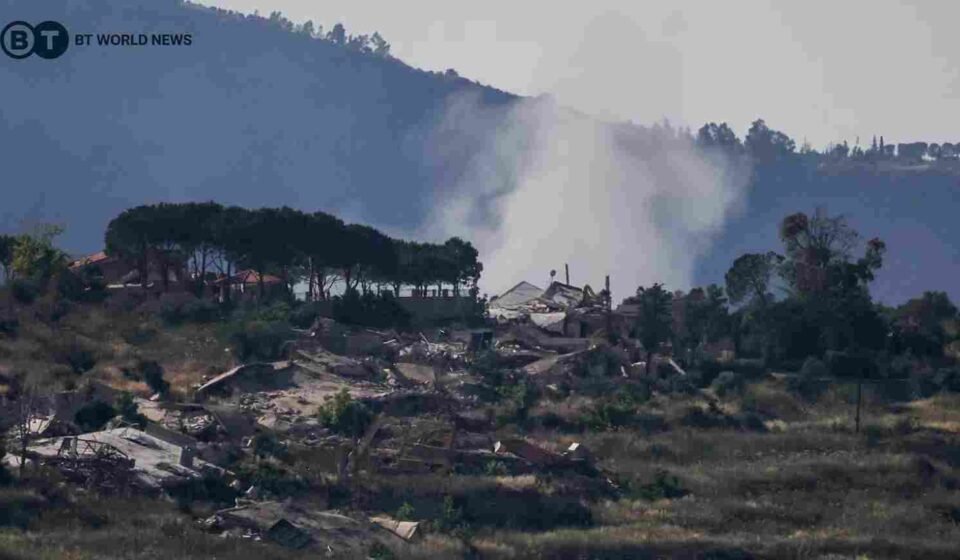
Israel unlikely to leave southern Lebanon under emerging US-Iran agreement, reports say

Israeli security sources stated on Saturday, according to Anadolu, that Israel will not pull back from the so-called “security zone” in southern Lebanon as part of expected agreements between the US and Iran.
“The security establishment is gearing up for potential orders from the political leadership to stop the ground offensive in southern Lebanon, in light of the developing agreement between Washington and Tehran,” reported the public broadcaster KAN, referencing its sources.
Israel Expected to Stay in Southern Lebanon Regardless of US-Iran Agreements
As per the sources, Tel Aviv is also getting ready to lessen its assaults deep within Lebanese territory due to concerns that they might threaten the US-Iran accord.

Visit my website for latest news BT World News
“According to the sources, military operations will persist but with an increased emphasis on the south.”
“They stated that the Israeli army will remain in the security zone in southern Lebanon.”
The Israeli military has maintained a severe assault in Lebanon since March 2, resulting in over 3,700 fatalities, injuring 11,600 individuals, and displacing more than 1.5 million people, as reported by Lebanese authorities.
The military further penetrated over 10 kilometers (6 miles) into Lebanese land, establishing what Tel Aviv refers to as a “security zone.”
Read: Thousands Rally in Stockholm Against Israeli Strikes in Gaza and Lebanon
Simultaneously, Israeli Prime Minister Benjamin Netanyahu plans to convene a Security Cabinet meeting on Sunday to talk about the expected US-Iran deal.
As reported by the daily Yedioth Ahronoth, the meeting will examine the regional effects of the agreement between Tehran and Washington.
US President Donald Trump posted on his Truth Social platform early Saturday that an agreement with Iran is set to be signed on Sunday.
Pakistani Prime Minister Shehbaz Sharif, whose nation has been facilitating talks between the US and Iran, also mentioned that the agreement might be concluded within the next 24 hours.
Iran, nonetheless, stated that the agreement will not be signed on Sunday but could be finalized in the upcoming days.
Tensions in the region have persisted since the US and Israel began airstrikes on Iran in late February, resulting in Iranian counterattacks on Israel and other nearby nations with US facilities, as well as the shutdown of the Strait of Hormuz, a crucial global energy passage.